

The history of American coinage is quite interesting, and especially to those people that want to create their own coin collections. Starting with the larger coins and then switching to the small ones, every single piece tells a story of its own, a story about the nation’s history, its culture, as well as its economic situation at different periods. So, it is no wonder that learning about it can be rather interesting to most people.
This could perhaps give you a better idea about the coinage history: https://www.investopedia.com/articles/economics/10/history-of-us-coinage.asp
Now, we are not here today to cover all the coins. Instead, we are going to focus on a specific one that definitely occupies a unique place in history. Even though it has been produced for only a short period of time, it has actually marked a major turning point in the evolution of the cent, and thus helped shape American currency. To cut right to the chase, we are referring to the Flying Eagle cent.
Today, this particular coin is highly regarded by collectors for its attractive design, historical significance, as well as its rarity, of course. But, why is it that it is so important? That is what we are here to find out. So, keep on reading to understand the origins of this cent, as well as to figure out why it is so significant. Who knows, you may start searching for it to add it to your collection right after you learn a bit more about it.
The Coinage Before the Flying Eagle
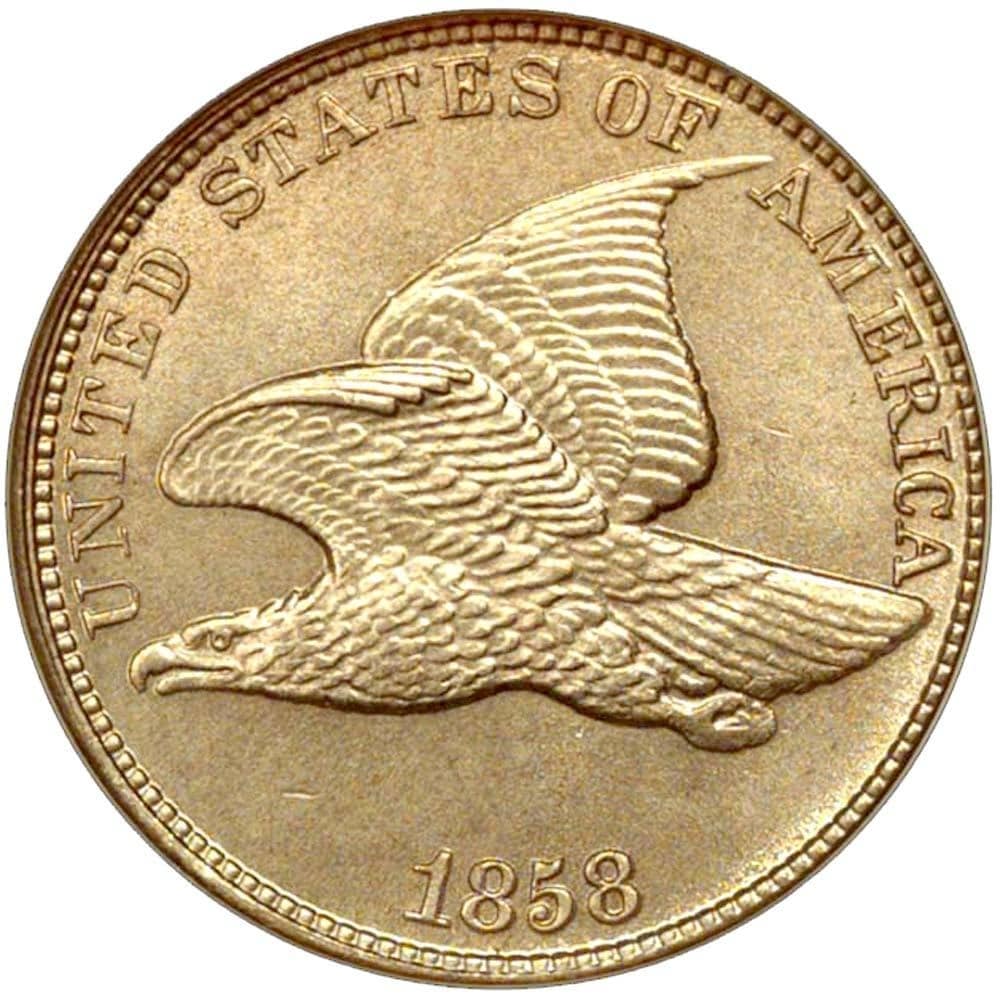
To really understand what the Flying Eagle represented, you will first have to, well, understand what was going on with the coinage before it. In 1793, the first one-cent coin was created, after the establishment of the Mint. It was large and made of copper. And, up until 1857, the US has been producing those large cents, which have shown to be quite impractical as the country grew, given that they were heavy, bulky, and rather inconvenient to carry. This is where the Flying Eagle, as you can see here, played a major part.
The Flying Eagle as the Turning Point
To cut right to the chase, this coin represented a kind of a turning point in American history. A major reform of the coinage was authorized by the Congress, which resulted in the introduction of this particular cent piece, which was actually the first small-sized cent produced by the Mint. This new design represented a dramatic departure from the previous ones, as it was much smaller, lighter, as well as, clearly, more practical for everyday use. So, it marked the ending of the large cent era that had lasted for more than six decades.
This particular piece was struck containing 88% coper and 12& nickel. That kind of a composition contributed to the lighter appearance. An elegant image of an eagle in flight was chosen for the design. And the result was a piece that looked not only modern, but also distinctly American. The bald eagle has long been a symbol of the US, representing independence, strength, as well as national pride.
The Importance of This Coin
Okay, but, why was the Flying Eagle cent so important? Well, it holds tremendous significance in the American coinage history for a few important reasons. For one thing, it introduced the small cent, which was probably one of its most important contributions, as even the modern cents can trace their particular size directly to this innovation. This specific change helped modernize American currency, as well as improve efficiency when it comes to commerce.
There is another great contribution attributed to this piece. When you finally have the early American flying eagle cent coins explained to you in details, you will realize that the Coinage Act of 1857 also eliminated the legal-tender status of most of the foreign coins that have been circulating around the United States. So, this specific piece was actually a part of a broader effort to create a more nationally controlled and more standardized monetary system.
Production Challenges and the Transition to the Indian Head Cent
Despite its enormous popularity and all the significance, the Flying Eagle cent actually brought about some problems of its own. It solved the problem of having to produce larger coins that were impractical and expensive, but it created some other issues. First off, it was difficult to strike properly, which led to many examples showing weak details. And then, the Mint also found that producing this piece caused dies to wear out quickly, thus reducing manufacturing efficiency and increasing costs.
Those are the reasons why this particular piece was short lived. And why it was replaced by the Indian Head design. That new design retained the same size and composition, but proved to be much easier to manufacture. Yet, although the circulation of the Flying Eagle was brief, we cannot fail to notice that its influence continued through those coins that followed it.

Sophie is a seasoned wearable tech expert with a passion for merging technology and lifestyle. With a background in electrical engineering and a keen eye for innovation, Sophie has dedicated her career to exploring the limitless potential of wearable devices. Her expertise lies in designing user-friendly and stylish wearables that seamlessly integrate into everyday life while enhancing functionality. Sophie’s commitment to staying at the forefront of technological advancements makes her a trusted authority in the ever-evolving world of wearable technology.